bCoatch

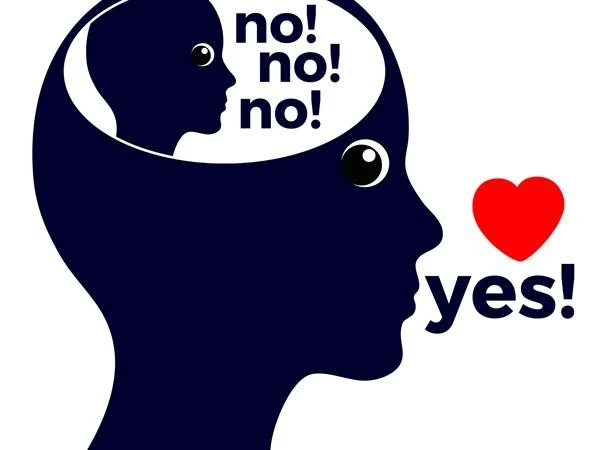
Learn to say “No”​

1639910812992

Learn to say "No"​

Saying “No” in the workplace is an essential part of ensuring you communicate your intentions comfortably, clearly and without wasting words or unnecessary time.

After all, you would agree that a true and authentic “ no”comes from a person who understand where the boundaries are.

A person that is wise when judging her actual ability, capacity and desire to deliver.

A person that doesn’t end up promising what she can’t or won’t be able to deliver.

This said, not everyone finds the courage to say “no” when interacting with colleagues.

In this article we discuss how to say “no” from a position of a mature, responsible and assertive person.

The case

During the first two coaching sessions with my client Aneeta, a middle-aged marketing manager working for a consulting firm, I have the perception Aneeta is one of those people driven by the desire to please others.

A desire that often drives her to take on board tasks and roles against her will.

When I invite Aneeta to identify some of the scenarios and motivations that move her to be agreeable beyond the acceptable limits, her answer is:

“I mainly take on board additional requests from my boss and her colleagues.

I accept them with the intent to please people and ensure they are happy.

The truth is that I don’t like disappointing people, especially if they work with me.

Deep inside, I am afraid to confront those people who I find particularly dominant.

Those with whom I would probably end up having a disagreement if I said “no”.

To avoid unpleasant confrontations, I find myself accepting undesirable tasks or give an in-between answer, which is never to the point and as direct as “no” would be.

As I prompt Aneeta to recognise the unwanted consequences of her behavior, she admits:

“I resent my boss.

I feel used.

I’m the victim of my own choices.

I end up compromising the quality of my work.

I run the risk of missing important deadlines”.

If you were Aneeta, what would you do differently?

Here are three steps that help you stand up for yourself and set healthy boundaries in the workplace.

1) Recognize the Need and Desire of the other

When you recognize the need and desire of your counterpart you understand and acknowledge her perspective, position and motivation.

This said, you don’t have the obligation to align yourself with her position let alone accept it.

Scenario A

I am aware that producing 3000 copies of your presentation helps you finalize your work faster…

Scenario B

I understand that for you it is important to promote John to the position of Finance Director.  I understand that by doing so, you recognize his effort throughout the past four years…

2) Express your Preference and Decline the request of your counterpart

Express your position and perspective and state clearly where your boundaries are.

Scenario A

…right now I am working on our latest marketing campaign.  This task takes  priority in my agenda.

Scenario B

…I personally believe that John is not ready to face the imminent expansion of the company and needs one more year to prepare himself for the role of Finance Director. For this reason, I neither approve nor support his promotion.

3) Resist the temptation to justify your position

Stay truth to your position.

Keep your final answer.

By staying firm on your answer your counterpart will understand that she can’t persuade you any further.

Ignore any second thoughts you may come up with.

Return to the place and the activity you have defined as your “priority”.

Silvia Bottini is the founder of bCoached, an international coaching practice helping executives and their team strengthen their Performance, Presence and Professional Reputation.

Fo Leadership coaching, HOGAN Assessments & Team coaching contact: silvia@bcoached.org

Your Leadership Style: Asking systemic Questions

166457

Your Leadership Style: Asking systemic Questions

Let’s admit it: posing questions is not how we usually help others find solutions. Often as leaders we adopt the role of ‘being the expert’ and provide direction on the ‘how to’ – how to solve a problem; how to overcome unexpected challenges etc. This is undoubtedly a valuable skill and indisputably one which leaders are highly regarded for. However, is this giving of advice and providing direct answers the most effective course of action? Are we truly supporting innovative thinking and decision-making processes for our counterparts?

Scientists and innovative thinkers lead with questions to generate breakthrough ideas. Sales people lead with questions to qualify potential clients. Asking questions is indeed a powerful way of discovering facts and data in order for us to take informed decisions. However, often we are afraid of appearing foolish amongst our peers or perhaps simply uneasy on the type of questions to ask. And when exactly should we pose our questions?

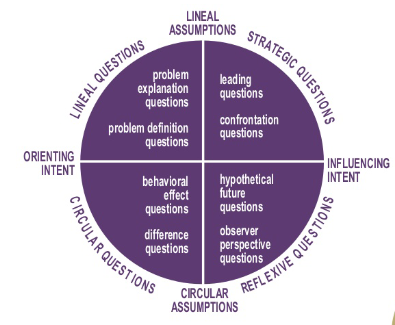
In this article, I introduce a simple and yet powerful framework that highlights four types of questions, their intent and the likely outcome. This framework is based on the work of Karl Tomm, Professor of Psychiatry at the Faculty of Medicine at the University of Calgary and director of its Family Therapy Program. In the field of coaching this is called “systemic questioning”.

Four Types of Questions and their Function

546564564

LINEAL QUESTIONS: these represent the ABC of asking questions and their function is to find out the facts. Simply put, they are the “Who, Where, What, When” of asking questions. They are factual based and aimed at discovering more about any situation or dilemma presented. Asking lineal questions is a viable and straightforward practice for gathering information that will assist us in reaching a fairly neutral picture of the reality being discussed.

Lineal questions can be asked at the beginning of a conversation to build rapport, when we need to become aware of specific details or when we want to pull apart a complex scenario during a brainstorming session. Here are some basic examples of lineal questions:

Who contacted the client first?

What did you propose to the client?

Where did the meeting take place?

When is your deadline?

CIRCULAR QUESTIONS

Circular questions are those we draw upon when we want to find out what relationships exist between people or entities. Their function is to discover the connections and dynamics between two or more parties, including their differences, possible agreements/ disagreements etc. When it comes to circular questions, the same question may be concurrently asked to multiple people to find out what discrepancies or commonalities lay between different people. We typically ask circular questions during debates that involve people who work interdependently, such as team members, and variables that are mutually dependent. Here are some examples of circular questions:

Who intervenes more in the board meeting, the chairman or the CEO?

How is it that we have the same results when we chose two different strategies? Who else has the same results?

Has it always been done this way? Who else agrees that it has always been done this way?

How would that differ from how it is now? Would it more or less than it is now?

How does the compliance team differs from the legal team? If the two teams were in the same office, would they work more effectively?

STRATEGIC QUESTIONS

With strategic questions we enter the realm of directive questions that are aimed at influencing our counterparts. The intent is to lead and prompt the other part to make adjustments. Strategic questions often embed a suggestion and because of their instructive and somehow corrective nature they can be provocative. Their function is to encourage counterparts to consider new possibilities as well as to take ownership of the new options they have discovered. We typically ask strategic questions when our counterpart is at a crossroads, or when doubts of which course of actions to take. For instance, when the counterpart is entirely oblivious of the impact of their decisions and actions. Here are some examples of strategic questions:

What can you do now to acknowledge that your objectives have to be aligned with the organization’s objectives? (A directive and instructive question. The intent here is to prompt the counterpart to take action).

Have you always disregarded the recommendations of the marketing team?

Is the habit of keeping your team in the dark during the decisional process and old habit or a new one?

Why don’t you brief your team on what is being discussed at the management meeting? (A directive question containing a suggestion)

How come you are not willing to share with your team some of the point discussed at the management meeting? (A provocative question)

Strategic questions have to be used with consideration, especially when they are corrective and posed in a provocative way. Although they can be very effective when we notice our counterpart is in need of encouragement or even persuasion, we have to ensure we have created a safe enough and non-judgmental conversational space for them to accept our suggestions or quasi-lecture instructions. Otherwise, we risk to run into resistance.

REFLEXIVE QUESTIONS

Reflexive questions have a facilitative intent, which means they help explore deeper levels of fact, data beliefs, ideas and situations. These questions elicit answers in which the counterpart will be expected to re-evaluate their point of view. There are several reflexive questions which Karl Tomm presents in his research (Interventive Interviewing: Part III. Reflexive Questioning as a Means to Enable Self-Healing) and they would deserve a separate article. For the sake of clarity, here is the original classification and a brief explanation of their functions:

Future-oriented question

The intent of these questions is to project the counterpart into a future scenario and stimulate their imagination. The aim is to prompt our counterpart to visualize without setting those boundaries that are normally imposed by our limiting beliefs or pre-conceptions.

How will things be different between you and your boss once you will start inviting her to your clients’ meetings?

Observer-perspective question

These are questions which invite the counterpart to put themselves in the shoes of someone else to think and behave as if they were the other person.

How do you think the head of Sales team would react once she is informed of the adjustment in the commission structure?

Unexpected context-change questions

The intent of such questions is to propose a chance of scenario that your counterpart is not able to envision or hasn’t thought about.

What would it be like if you could offer your sales team a two-week negotiation training once a year?

Embedded-suggestion questions

These questions are real suggestions that help the counterpart consider another option, precisely the one we are suggesting.

Instead of thinking that your boss is uncooperative, what if you thought he is overstretched? How might you approach him instead?

Normative-comparison questions

They have the purpose of prompting the counterpart to make an accurate comparison, especially in those contexts in which they have not carefully compared two or more samples.

Do you think consumers in the Middle East are more inclined to buy online compared to consumers in Europe?

Distinction-clarifying questions

Do you think his decision to leave the firm is about x, y or may be z?

Questions introducing hypothesis

The intention of these questions is to project the counterpart into a hypothetical scenario that may or may not happen. It helps thinking ahead about the possible solutions to adopt in case the assumed situation becomes a reality. Asking such questions is an excellent exercise when, for instance, a team is asked to put in place a contingency plan.

What do you think your team can do to prepare in case of a third lock-down?

Process-interruption questions

When you see that you directions lead you to the wrong place, what do you do next?

Today I have introduced to you four key question types to practically help sharpen the reflexive ability of your teams, to help with idea generation and to help anticipate needs and analyze complex scenarios. I wonder if your perception about questioning has changed? And if it has, in which way. I have endeavored to transition thought from a position in which the asking of questions is viewed as a sign of weakness and vulnerability to one in which is an indication of skillful leadership, to guide and to get the best from your teams.

Do you want to know more about systemic questioning and desire to experience it yourself to enhance your leadership awareness and decision making process? I invite you to contact us at bCoached by using the link below.

The 5 Factors that drive human behavior

Behavior

The 5 Factors that drive human behavior

In our everyday life where much of our mental energy is consumed by interacting with people who have a variety of perspectives and cultural backgrounds, understanding what drives human behavior is a competence leaders can no longer ignore. The best place to start is the concept of “Behavioral Driver,” created by the American psychologist Taibi Kahler and used worldwide in Transactional Analysis.

Behavioral drivers are essentially mental forces which tell us how things should be done for us to be aligned with our culture and accepted as members of the system we live in.

Their function is to make us act in such a way that we feel ok and validated by others. We internalize these drivers during our childhood, when our parents give us indications about which behaviors they would either praise or reproach.

There are five drivers:

· Be Perfect!

· Try hard!

· Hurry up!

· Please others!

· Be strong!

Let’s explore each driver and understand how they influence the way we act.

perfaction

Be perfect: this driver is the internal force telling us to be faultless, flawless and impeccable.  Those who act under this driver are the so called “perfectionists”, who set high standards of performance, pay attention to details and maintain an immaculate exterior. In the attempt to achieve perfection, “perfectionists” risk becoming highly critical of themselves and find it difficult to accept their mistakes. The internal voice they are unconsciously motivated by is “you should be better” or “you are accepted and loved, only when you are perfect”.

try harder

Try hard: what matters to those motivated by this driver is the amount of effort put into what they do, regardless of results.  They focus on their own attempts rather than on putting the right amount of energy into completing a task or a project.   The internal voice they unconsciously hear is “you are not working hard enough” or “you are accepted and loved only when you try hard”. Hence, they often turn small tasks into huge ones for the fear of being criticized for not trying.

hurry up

Hurry up: for those motivated by this driver, everything is urgent and time is limited. They speak, move and work fast, often disregarding valuable pieces of information in order to complete their current tasks and move to the next. It is not unusual for such people to be double if not treble booked and make demands on others to hurry up as well. The internal message they are motivated by is “you are not good enough when you don’t hurry” or “you are accepted and loved only when you hurry up and are fast“, which often leaves them with a hectic agenda to manage and no time to think.

nonono

Please others: with this driver we step into the territory of those who feel compelled to meet the demands of others, including their unexpressed desires.  Those who act under the pressure of this driver tend to prioritize the needs of others at the expense of their own.  The internal voice that unconsciously motivates them is “you are good enough only when you take care of others”. Since they feel pressured to create good relationships and get on well with others in order to feel accepted, they find it difficult to deliver criticism and to turn down those requests they know they can’t meet.

Be Strong

Be strong: this driver is the internal force telling us to detach ourselves from our emotions and desires, so that we can face the hardship and pressure of everyday life. Those who act under the weight of this driver hardly show physical and mental fatigue and often put up with tough working conditions.  The unconscious internal voice that motivates them is “I am good enough only when I don’t show weaknesses” or “I am accepted and loved only when I am strong”. Although they often display strong nerves and are good negotiators in a crisis, they risk bottling things up and overwork until they burn out.

Knowing what the five drivers are and the type of behaviors they generate, allows us to become conscious of how we tend to act when we are under pressure. Eventually this knowledge and awareness gives us permission to adopt strategies that can mitigate these strong driver forces, when needed. Also, it becomes easier for us to recognize these forces in others, e.g. our colleagues and team members, and eventually adjust our interactions to form more effective relationships.

Principally, we have two dominant drivers and one weak.For this reason, I always encourage my clients to complete the “Driver’s Questionnaire” to understand what their dominant forces are.

To identify your two dominant drivers, I invite you to complete the “Drivers’ Questionnaire”, which I can share with you personally. Contact me directly: silvia@bocached.org

5 Steps to select a Team Player for a high-performing Team

team

5 Steps to select a Team Player for a high-performing Team

Whether you are a newly appointed CEO, the head of a global function, or a team leader, the criteria you use to select your team members will determine the performance of your team. As a matter of fact, putting the right people on the team is “the enabling condition” for the team to work effectively and succeed in today’s rapidly changing world. 

According to Dr. Peter Hawkins, a professor of leadership at Henley Business School, there are five key principles to take into account. In this article we look at what they are and how to apply them.

1. VALUES

Skills can always be learned, but to create a value driven team where its members are fully aligned with the guiding principles of the organization, you must select people that are supportive of and see those principles as their guiding beliefs and motivating factors. After all, values drive the attitudes and behaviors that will make your team either cohesive or unstable.  Team members who are aligned with its organizational values are ambassadors for those values, both internally and externally. Their actions demonstrate them daily.

It is important to ensure that organizational values that drive the company you are part of have been both set and properly disseminated before you go on to discern the values of a potential team member. Examples of values include: honesty, result-oriented, tolerance, respect, humility, teamwork, humility, above and beyond.

In forgoing a psychometric test, one of the easiest way to establish the values of an individual is to ask the simple question: “What words would you use to describe your values”? And when you want to go one step further, which I highly recommend you do, you can invite completion of a value-based inventory and questionnaire that you can eventually discuss with them in full confidentiality.

2. REQUISITE DIVERSITY

“Requisite diversity” is an important factor, if not the most important when it comes to forming a highly performing team. To start with, “requisite diversity” means “a level of diversity that is equal to the diversity in the stakeholder world the team needs to engage with” (Hawkins, 2014). The more diverse the team is, the better equipped it becomes to face change in its stakeholder environment, introduce new perspectives and bring the right capabilities. For the purpose of understanding how to create “requisite diversity” within teams, Professor Peter Hawkins suggests considering the following four elements: cognitive diversity, identity diversity, personality diversity, and systemic diversity.

Cognitive diversity

Cognitive diversity in a team is defined as having enough differences in perspectives or information processing styles. It is achieved only when team members with different cognitive repertoires are working together. This way, the team can bring to the table different models of thinking, processing information and generating solutions. Basically, the greater the number of cognitive skills and tools, the faster and more efficiently the team can problem solve and avoid blind spots. 

It is important to know that cognitive diversity is less visible than other types of diversity, e.g. gender diversity. What is more, it can be hindered in mono-culture organizations where people often like to fit in or feel pressured to conform.

Identity diversity

Identity diversity is related to gender, age, ethnic origin, cultural background, disability. It refers to those traits that categorize us when we are born, although this definition may be rather restrictive, since identity diversity can be dynamic. Research has already provided enough evidence that having a gender balance within team, especially on the boards of organization, enhances company performance. In addition, identity diversity fosters equal opportunities, provides a culture of fairness and inclusion and helps promote the best talent. 

Personality diversity

One of the vital component of a high performing team is to have a good balance of helpful behaviors across its team members. After all, the way each individual thinks and behaves can either facilitate the progress of a team or hinder it. Examples of helpful behaviors include: adaptability; from being a skillful organizer to a creative thinker, from being a great supporter and listener to a skillful resource investigator. These have to be attributes that complement each other. Therefore, when selecting team members, it is important to ensure all these aspects of personality are taken into account and are well balanced.

A secure way to ensure the team has a good balance of personality, is to use psychometric instruments. These can help you understand the different personality types, motives and preferences of each team member. The tools available are numerous, from Hogan Assessment Systems to Belbin Team Role Analysis, Myers-Briggs Typology Inventory or Everything Disk. 

As a leadership development consultant focused on assessing personality, I highly recommend the Hogan Assessment Systems when it comes to measuring personality. Hogan Assessment Systems have received star reviews from the British Psychological Society and are extensively used by Fortune Five Hundred organizations.

Systemic diversity

Seeing the big picture and being able to capture how several systems are connected and working together is what is called systemic thinking. The whole rather than its individual parts take center stage in systemic thinking. Creating systemic diversity in a team essentially means inviting stakeholders to the table who occupy different positions within the system and who see things from different perspectives.  For instance, for a team whose primary task is to design an innovative product, stakeholders can be investors as well as customers, product designers as well quality control experts. Stakeholders can be engaged within teams either by being invited directly into meetings to bring their perspective or by being asked to provide insightful data via surveys, so that the team can make informed decisions.

A crucial aspect to take into account is that systemic diversity always goes beyond the organization and its boundaries. Therefore, your team will have to incorporate representatives across the entire system at different stages of its life.

3. COLLABORATIVE WORKING ATTITUDE

“Not everyone can work well in a team. Just because someone has superb task skills does not mean that he or she will be able to collaborate with others to bring those skills to bear on a collective task (Hackman, 2011a:87).

As long as the right conditions for a collaborative working environment are in place, selecting team members that are open minded and curious about new ideas will ensure you have fluidity of creative thoughts and sufficient debate during brainstorming sessions and group discussions.  These individuals normally thrive in such activities and don’t seem to have the need to exercise control or impress others during collective discussions. 

Being able to communicate with each and every team member, both collectively and individually, is another box you want to tick when it comes to selecting a collaborative individual. Real team players are adept at all types of communication, and are prepared to afford others the time, space and voice needed for collaborating ideas.

Another skill that is vital for collaboration is the ability to adapt, especially when things don’t go as scheduled. Delays can occur and priorities can shift. Therefore, being able to adjust swiftly and smoothly without causing disruptions, is another attribute to look for in a team player and one that you can’t easily teach.

And lastly, organizational skills are crucial when it comes to collaboration. From the simple individual task of keeping the diary updated with every team event of the week, to the ability to delegate and be punctual, selecting a team member that you don’t have to coach to become better organized, is an advantage you should not underestimate.

4. COMMITMENT TO THE TEAM PURPOSE

The reason why a team exists in the first place is to perform a task that serves a specific purpose. Be it the marketing, finance, production or sales team, once the task has been defined, the team needs to understand and fully embrace the “why” behind the task, since all team activities will be connected to it. The team purpose is the “why”. It is the guiding vision that sets the direction for the team and it is for this reason that it is crucial for each team member to be truly connected to this purpose, which eventually serves the higher purpose of the organization.

Before on-boarding a new team member, it is worth spending some time to evaluate their motivation and level of commitment to the purpose. One way of doing this is to give them some questions to consider such as: What contribution can you make to the team that will fully serve its purpose?   How can the team step up to the challenge of fulfilling its purpose? What level of commitment do you bring to its purpose?

WATCH OUT FOR "DERAILERS" AND "NARCISSISTS"

Research has shown that there are two types of personality to avoid at all cost when putting together a team. The so called “derailers” who tend to jeopardize the work of the team by not respecting the teams’ rules and disagreeing with either the team purpose or modus operandi. These type of people simply suck the required energy out of the team and work against the flow. 

Individuals with narcissistic personality traits can often be charismatic but transpire only to serve their own self-importance, personal agendas by showing little empathy for others and having no passion for the collective effort of the team. Narcissists are all about themselves and the sense of grandiosity they always carry within.

Spotting a ”narcissist” may take long, simply because some of these people are charming and captivating. However, they will eventually show their true colors when it comes to collaborating with humility for the collective purpose of the team. Therefore, choosing a humble talented individual is always a safer choice. And the best one!

Whether you are a leader or work in talent management, reach out to us for an initial conversation on how we can support you selecting team players or using the Hogan Assessment System to test personality for business. Contact me directly: Silvia@bcoached.org


Does Personality Predict Leadership Performance?

questions

Does Personality Predict Leadership Performance?

One of the sentences that has stayed with me since I began working in the field of leadership development is “who you are is how you lead”. This insight comes from Dr. Robert Hogan, an American psychologist internationally known for his innovative research on personality assessments and how personality impacts leadership and organizational effectiveness.  Before delving into personality assessments, I would like explore the concept of personality and its implications for organizational performance.

A widely accepted definition of personality is “the long-standing traits and patterns that drive individuals to consistently think, feel, and behave in specific ways. Our personalities are thought to be long term, stable, and not easily changed”. Given this understanding, it would be common sense to take personality into account when we hire and develop leaders within organizations.  In fact, personality is as critical as job competence in predicting and measuring job performance.

Despite the fact that both job competence and personality can be assessed, many organizations today focus solely on the former, neglecting the latter. Furthermore, personality is often reduced to desirable traits listed on a job offer, assessed during job interviews, or reviewed in annual 360 evaluations without specific scientific criteria or instruments.

If we agree that hiring a civil engineer for a cardiologist position is inappropriate, we should also recognize that recruiting a finance director with a tendency to become moody and excitable within an auditing firm is equally problematic.

The Hogan Assessment Systemsare testing measures created by Dr. Joyce and Dr. Robert Hogan to assess normal personality for business and are widely used by Fortune Five Hundred organizations.

Let’s examine how these assessments acknowledge and measure normal personality within the business community and the benefits they bring to leadership and overall organizational performance.

The Hogan viewpoint on Personality

According to Drs. Joyce and Dr. Robert Hogan personality has two dimensions: personality from the inside and personality from the outside.

wmremove-transformed

Personality from the inside is the way we describe ourselves to the external world; essentially the person we think we are, which Dr. Hogan defines as “Identity”. Identity is the story we tell others about ourselves based on our self-representation.  It is worth noting that when we speak about our identity, the personality traits we attach to ourselves are often overestimated and based on personal hopes, dreams and ambitions. For example: “I am a multi-tasker”; I can definitely show empathy”. “I am well organized”.  “I have an excellent sense of humor”.

reputation

Personality from the outside it is how others describe us – the person external observers think we are, which Dr. Hogan refers to as “Reputation”. Reputation is the collective story others tell about us based on their observations about our behavior, not just a single instance. Examples might include: “She’s a people person”.  “He’s an empath”.  “She’s the expert when it comes to time management”.  “He’s a Yes Man”.

The HOGAN Assessment Systems measure Reputation.  As Dr. Hogan notes “Freud would say the you that you think you are is hardly worth knowing, because you made it all up”. It is your self perception formed without seeking input from others about how they see you.

In an interview a candidate might emphasize their ambition, but if you ask several former colleagues, they might reveal the candidate’s lack of interest in competing with peers.  This highlights potential discrepancies between the way we describe ourselves and the way others describe us.

According to Dr. Hogan, understanding personality, or reputation, is crucial for both individuals and organizations. For individuals, it provides awareness of how their behavior is perceived by others, enabling them to adjust their actions to enhance the quality of their interactions.

The HOGAN Assessment Systems help identify aspects of our interpersonal behaviors that need improvement and that we are unaware of. By highlighting these issues, they provide highly efficient and reliable tools for leaders to manage them.

Additionally, these assessments assist organizations in their talent selection process, allowing them to predict the type of employee they are hiring during a recruitment process.

The Hogan Leadership Forecast Series

There are three HOGAN assessments I highly recommend using for leadership development and talent management, collectively known as the “Leadership Forecast Series”.

hpi
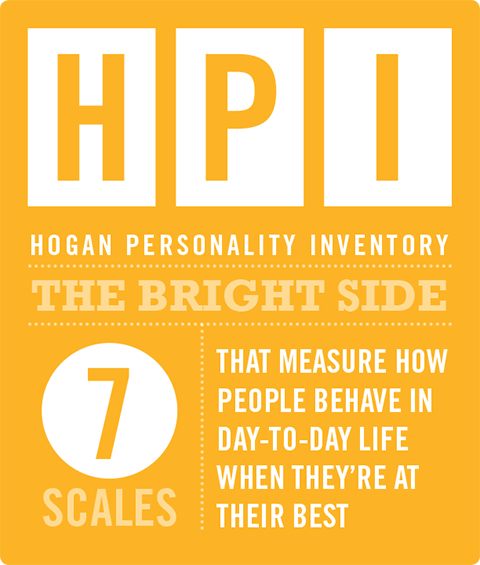
1. Hogan Personality Inventory –

HPI – This assessment measuresthe bright side of personality”, which comprises the aspects of our personality that others see in us when we are at our best. It is also referred to as our ‘day-to-day personality’ or ‘productive behavior’.  These behavioral tendencies are observed in everyday situations and indicate how we relate to and collaborate with others, approach our work and solve problems.

The HPI measures normal personality and interpersonal characteristics that are essential for career success and progression.  They reveal important aspects of an individual interactional style and provide interpretations specific to the job context.

hds
2. Hogan Development Survey –

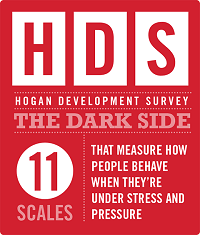
HDS – This assessment measures “the dark side of personality”, which comprises personality traits or behavioral tendencies that others see in us during time of increased stress or when we have a bad day. These tendencies referred to as “derailers” are only observed in high-stress situations or when managing our public image.  Essentially, they are “the dark side of personality” or our “counterproductive behavior”.  This dark side consists of strengths that, when overused, can cause problems at work or in life, such as self-confidence turning into arrogance or influence that becomes manipulation.

Motives, Values, Preferences Inventory – MVPI – This assessment measures “the inside of personality”, which comprises an individual’s profound values, motives and interests that drive career choices and eventually bring job satisfaction. They are at the core of what we believe in and determine our choices before, during and after our working life.

The MVPIassessment helps hiring managers establish compatibility between a candidate and the organizational culture.

As a leadership development consultant I recommend using the HPI, HDS and MVPI for talent selection and leadership development.  These tools are essentials for helping leaders identify their strengths, mitigate the risks of personality derailment, and uncover their core values and motivations, ultimately improving organizational performance.

Whether you are a leader or work in talent management, I invite you to reach out for an initial conversation on how my team and I can support you in using the Hogan Assessment Systems. Contact me directly: silvia@bcoached.org or book an appointment via my calendar: https://calendly.com/silvia-executivecoach/30minutes

11 Personality Traits that can destroy a Leader’s Career

banner

11 Personality Traits that can destroy a Leader's Career

Several words can be used to describe what “successful leadership” is, including influence, power and authority.  That said, I agree with the definition that successful leadership is the extent to which a leader can “build and maintain highly effective teams”. No matter how charismatic or influential a leader is, what counts is the know-how to interact with and help teams operate efficiently.

This concept is central in Relational leadership. Here, the focus is placed on the ability of the leader to develop meaningful professional relationships, which help create useful alliances as well as fruitful collaborations. However, achieving collaboration doesn’t just happen. According to Prof. Robert Hogan, it requires a leader to be highly skillful at getting along with others as well as getting ahead by receiving the support needed by teams and the wider organization. For these reasons, leaders greatly benefit from knowing the eleven personality traits that define aspects of interpersonal behavior detrimental to collaboration. To sustain a stable career, it is essential to understand how the eleven traits negatively impact the ability to interact with others and hinder chances of being chosen for senior leadership positions.

In this article I introduce the eleven derailers as presented by Prof. Robert Hogan and explain how they can be managed effectively. Each type of derailer is typified by a manipulative strategy and an unconscious message which directly impacts their teams. Identifying the differences between these is crucial to understanding and then moving beyond the derailer, as I will show.’

Excitable

meet

Excitable describes an emotionally volatile person, one that is highly energetic and intense one day, then disappointed and demotivated the other – one that is optimistic about a project now, then pessimistic and skeptical later on. Typically, leaders who score high on the excitable scale can be perceived as very moody and temperamental. For this reason, people often feel they have to hold back with them. 

As Prof. Robert Hogan once stated, the manipulative strategy they use to lead and the unconscious message they send out when levels of stress are high is: “Do what I want or I’ll throw a fit”. And the most common questions colleagues ask when dealing with them is “What mood is he/she in today”.

Leaders who score high on the excitable scale, can benefit from emotional management techniques. These include learning to recognize the signs that they are about to lose control and leave the room for a while. Pausing helps them remain calm and clearheaded. It is vital to recognize that emotional volatility can upset colleagues, reducing their motivation and, eventually, their productivity.

Skeptical

women question

Skeptical describes a person who tends to doubt others and assumes they have bad ulterior motives. Although leaders who score high on the skeptical scale have high political awareness, are astute and perceptive, they often act with mistrust of people and institutions. They can be consumed with what can go wrong instead of looking at solutions and taking decisions.  They believe that “you can’t trust anyone but yourself”.

The manipulative strategy and unconscious message they send out when under pressure is: “Don’t defy me or I’ll retaliate”.

 Leaders who score high on the skeptical scale, can experiment with acting in a more friendly and engaging way.  It also helps them to identify two to three key people in the workplace and begin collaborating with them. While collaborating, they should practice holding doubts and assumptions to themselves. After all, not everyone is a traitor or a wrongdoer.

Cautious

Cautious typically describes a person who is reluctant to take risks and requires second and third opinions before going ahead with something. Essentially, cautious leaders are afraid of failing and would rather not make any mistakes for fear of being criticized. They can be indecisive and even hesitant to express their point of view. They can come across as unassertive and often avoid taking controversial positions in public. For these reasons, they may delay decisions and prevent teams from progressing as fast as their competitors.

When under stress, a common manipulative strategy and unconsciousness message is…Do what I want or bad things will happen to you.

First of all, leaders who score high on the cautious scale, would benefit from describing the learning opportunities associated to the mistakes they make. Secondly, they could experiment with providing spontaneous suggestions and solutions rather than always offering carefully considered answers. Last, having the courage to stand up for themselves and their teams when needed is something they would need to practice more.

Reserved

book

Reserved describes a person who comes across as independent and detached.  Reserved leaders generally value one’s private time and space and would rather be working from their own private office than from an open plan floor. These are the type of leaders that withdraw at times of intense stress. Essentially, they give the impression of being tough – focussed on tasks rather than people.

The manipulative strategy and unconscious message they send out when levels of stress are high is “Do what I want or I’ll never speak to you again”.

The first coaching tip I would give leaders like this is to engage with their teams one hour every day, be it because of a meeting or an informal lunch. The second one is to practice recognizing the expression of positive or negative feelings others may show during interactions. The third is to practice observing other people’s reactions and discern whether they have been demotivated or encouraged by what has been said or done.

Leisurely

Leisurely describes a person who often come across as co-operative and pleasant to deal with but covertly procrastinates and puts off unwanted tasks. Essentially, leaders who score high on the leisurely scale show passive-aggressive tendencies.  The behavior you see is in fact opposite from what they think inside. In a meeting they may promise one thing but eventually do another. 

Their manipulative strategy and the unconscious message they send out when under pressure is: “Do what I want or you’ll be sorry.”

One way to mitigate high leisurely tendencies is to begin to make less promises but ensure that they are fulfilled and followed up. Another exercise I recommend doing is to identify two people within the team each week and practice giving honest feedback. No need to give lip service: say what you think, say it transparently.

Bold

Bold describes a person who is unusually self-confident, feels entitled and unwilling to admit mistakes. Despite the fact that leaders with high scores on the bold scale are assertive, energetic and fearless when facing challenging tasks, they are at risk of too much self-promotion and unhealthy competition for the simple purpose of getting ahead. Essentially, their ego causes them to be dominant and, at times, intimidating. They believe that they deserve special treatment and when things go wrong, it is never their fault.

When levels of stress are high, the unconscious message they send out is: “I demand you do what I want. Do it now because I am who I am”.

What helps leaders who score particularly high on the bold scale, is to begin sharing credit with their teams when projects are completed successfully. Naming, thanking and rewarding team members who have helped them achieve their targets is a good practice.  Being competitive within the organization may not be the healthiest way to relate to colleagues, especially because the real competition is outside the organization. And last, use self-confidence and energy to motivate not only themselves but others too.

Mischievous

joker

Mischievous defines a person who is charming and, therefore, fun to be with. However, leaders who score high on the mischievous scale are at risk of manipulating others to serve their own agenda without showing remorse for doing so. They are those who take risks and often test the limits without considering the consequences of their actions.

When pressure is high, the unconscious and manipulative message they send out is: “If you do what I want, I will love you”. 

Leaders with strong mischievous tendencies would first benefit from partnering with a colleague who is humble and down to heart. Second, they would do likewise from learning to apologize to those they may have used for their own purpose without hiding behind overelaborated excuses.  Third, recognizing that a successful and stable career depends on relating to others with authenticity and honesty, would also have a positive impact. Mischievous tendencies can only create a reputation of being a selfish and unscrupulous leader – a reputation that, long term, is highly detrimental for any type of career.

Colorful

Colorful describes a person who is sharp-witted, expressive and attention-seeking. A drama queen would be the appropriate description of a person who scores high on this scale.  Although leaders with a high tendency to be colorful make a strong first impression, they often run the risk of monopolizing attention at the expense of others. They are those people who tend to dominate meetings by constantly speaking, interrupting and even talking over others. What is more, they need constant stimulation and get bored easily. 

The manipulative strategy and the unconscious message they send out when pressure is high is: Do what I want, and I’ll entertain you further.”

 Leaders who score high on the colorful scale would benefit from practicing active listening, asking questions and paraphrasing what others say during meetings. What can help them as well is to write daily to do lists with clear tasks and specific objectives to increase their focus. 

Imaginative

Imaginative refers to a person who thinks highly creatively and, at times, in odd ways. Although leaders who score high on the imaginative scale are very bright and innovative, they have the tendency of throwing millions of ideas on the table that they eventually can’t or don’t execute. The leaders who typically launch several initiatives without following them up. For these reasons, they are at risk of being perceived as eccentric.

When levels of stress are high, the manipulative strategy and unconscious message they send out is: “Do what I want and you will be amazed at the result”.

The first coaching tip I usually give to leaders who are highly imaginative is to partner with a mentor they trust to ensure their ideas are practical and executable before they make them public. The second tip is to work only on those ideas that seem to be well received by the board, their teams and mentors. The third one is to collaborate with a colleague who is good at implementing ideas and has a practical and pragmatic approach to it.

Diligent

team

Diligent refers to a person who is hard-working and highly compliant. Although leaders who score high on the diligent scale have high standards of performance for themselves and others, they find it hard to delegate tasks and often micro-manage their staff. What is more, they can be inflexible about schedules, rules and procedures.

When under pressure, the manipulative strategy and unconscious message they send out is: Do what I want because there are rules. And when rules are not respected, there are serious consequences.

The first coaching tip for such leaders is to practice delegating tasks and leaving teams to work on their own for some time, allowing space for mistakes. The second is to focus on completing projects rather than working on delivering perfection. And the third one is to regularly book one day off in the diary to experiment with creative activities away from the workplace.

Dutiful

Dutiful describes a person who is ingratiating and always eager to please. Although managers who score high on the dutiful scale are excellent team players and supportive of corporate decisions, they are those who struggle to say “no”, especially to their boss. They are always preoccupied with keeping the boss happy at the expense of their teams. Dutiful leaders over-rely on the guidance of advisers before making decisions.

When pressure is high, the manipulative strategy and unconscious message they send out is: “Do what I want because I am in charge. Be loyal to those who are in charge”.

 Leaders who score high on the diligent scale would benefit from showing independent thinking, even when it is not aligned with their boss’ thinking. The practice I recommend here is to begin to say “No” to requests that are unreasonable, no matter whether or not they come from a team member or the boss.

Learning to manage “derailers’ can make a significant difference in the professional life of managers and leaders alike.  As an executive coach, I can say that successful leaders take good care of the way they relate to and are perceived by others, inside and outside the organization.  At bCoached we work closely with our clients to uncover their derailers and support them in their leadership journey.  For more information on how we can support you, contact us directly: silvia@bcoached.org

The Four Pillars of Employee Engagement

Bcoach image

The Four Pillars of Employee Engagement

In an organization where teams perform effectively, timely and consistently, the employees are fully committed to achieve the vision of the organization, attain its goals and fulfill the expectation of its stakeholders.  In other words, they are fully engaged with the mission of the company and eager to contribute to the organizational success by going the extra mile.  In the world of organizational performance, this is described as “employee engagement”.

According to David Macleod and Nita Clarke, authors of Engaging for Success (Macleod and Clarke, 2009), there are four key elements that drive effective employee engagement. In this article I introduce them with a brief statement extracted from Engaging for Success and illustrate them step by step.

Strategic narrative

“I need visible, empowering leadership that articulates clearly where we have come from, where we are now and our vision of where we are going. What is the bigger picture of which I am a part of and how does my role fit in with achieving our shared vision?” (Macleod and Clarke, 2009)

A common denominator that David Macleaod and Nita Clarke observed in organizations with high levels of employee engagement and performance, is strategic narrative about the organization. Strategic narrative refers to the story of an organization highlighting where it startedwhere it is now and where it is heading to. These three stages represent the milestones the organization prides itself of, internally and externally.  Where it started represent the deepest roots of the organization, precisely who and what gave life to it, where it is now illustrates how the organization and its people have managed to evolve, where it is heading to is the ambitious future the organization is working towardsIt is a powerful and authentic story that gives employees a sense of belonging and a clear direction. It encourages them to be part of it, so that they can shape the now and prepare for the time to come.

An organization with an empowering strategic narrative celebrates its people, from the founders to those who accomplished the last project or launched their newest product.  Every significant milestone is a reason to praise and reward people, collectively and individually, for their time and unique dedication to the shared purpose. Every accomplishment is captured in the story of the organization, with no exceptions.

Engaging managers

“I respond best to a boss who makes it clear what my role is and helps me to harness my energy and creativity to play that role optimally. I want my achievement measured and celebrated and I thrive on opportunities to learn, develop and contribute more”. (Macleod and Clarke, 2009)

Leading by example is the only behavior that ensures employees speak and behave as their leaders do. Therefore, when an organization aims to increase its employee engagement, it simply needs leaders that consistently think, decide and act with the aim to truly engage their employees.

Engaging managers use positive language and avoid negations when talking to their team members. They clearly, succinctly and to the point say what to do with encouraging words.  They ask questions and often listen.  In practice, they take the time needed to relate to their colleagues on a daily basis and often build personal connections while keeping healthy boundaries.  For instance, truly engaging leaders never take business trips as an excuse not to be present. They ensure they are available for their team members before and after each trip and keep them updated on the progress they make while offsite. Being present, giving and receiving feedback is crucial to sustain employee engagement, regardless of the physical distance in between or the restrictions brought nowadays by covid 19.

Engaging leaders are grounded and humble.  If you walked into their office, you would not recognize that they are the leaders.  You would simply find them among their colleagues brainstorming with or supporting them in completing their individual or collective tasks. What is more, they love to share their rewards with their teams because it’s never about their personal success but about the endeavor of the organization and its people.

Employee voice

“I like to know that my ideas and concerns are heard and I want to be told what’s going on. I flourish when treated as a human being, not a human resource, and given leeway to share responsibility with my colleagues for our part in this collaborative enterprise”. (Macleod and Clarke, 2009)

The reason why organizations employ people is to have their full contribution, not only in terms of technical skills but also in terms of strategic thinking about the overall mission, values and culture.  You would agree that employees who look forward to a new working week as much as they look forward to the weekend, are filled with passion for what they say and do within the organization.  Employees who come to work dragging their feet, are those whose commitment to what the organization stands for is close to null.

To inspire employees to their highest level, so that they are fully engaged and look forward to participating in the work, leaders are called to listen to and value their perspectives.  After all, employee voice is the means by which staff communicates their views and influence matters that affect them at work.  And, most importantly, it is the way employees contribute to innovation and performance by sharing their ideas.  For this reason, it is vital companies have policies and practices in place which enable employees to effectively voice themselves.

In large organizations, for instance, employees can have their say through collective channels, such as employee representatives, staff councils and forums. They should also be supported to share their thoughts individually and directly with their managers. This way, they are encouraged to speak out but also feel empowered to suggest news approaches of work.

It is important to note that employee voice is also a way to express concerns and highlight issues that can be detrimental to the well-being and reputation of the organization. In such circumstances, leaders are called to create a smooth procedure that allows employees to confidentially inform someone in an appropriate position. Ultimately, employee voice can only be promoted and safe-guarded when it becomes a genuine and respectful two-way dialogue between the employees and their leadership team.

Organizational integrity

“I prefer clear and consistent alignment between what is said and what is done. If the organization claims its people are its greatest assets, please do not use command-and-control tactics leading to bullying, grievances and mistrust. Values alignment matters”. (Macleod and Clarke, 2009)

A big word, which is used to portray cohesion and togetherness when it comes to adherence to the values and principles set by the organization.  Organizational values are beliefs and principles the organization stands for.  Examples of common company values are Fairness, Diversity, Collaboration and Partnership, Discipline, Honesty, Courage. 

In essence, organizational integrity is the collective version of personal integrity.  We see personal integrity when an individual’s actions are aligned with what the individual believes in and says.  In the same way, we see organizational integrity when the entire work force behaves according to what the organization believes in and says.

When leaders align their words, messages and actions with organizational values, organizational integrity increases. When leaders treat organizational values as an ongoing priority because they truly believe in them, they spontaneously align their actions with those values. They don’t feel obliged to respect them. On the contrary, they consistently inspire, motivate and incentivize their colleagues to be committed to those beliefs.

As an organizational consultants, I often come across companies where one of the four enablers described by David Macleod and Nita Clarke are weak or non-existent. For this reason, I invite you to reach out to us at bCoached for an initial conversation on how we can support your organization boost employee engagement. Contact me directly: silvia@bcoached.org

The DNA of a Team

DNA BLOG

The DNA of a Team

As a team coach, I can never stress enough the importance of strategically creating and developing teams, which ultimately unable organizations to effectively achieve results. As Patrick Lencioni, the author of “The Five Dysfunctions of a Team’, says, “Not finance. Not strategy. Not technology. It is teamwork that remains the ultimate competitive advantage, both because it is so powerful and so rare”.

Having considered this, before organizations go about investing in teams, there are some basic principles to acknowledge. In this article I illustrate them step by step, so that we can clearly see what the essential requisites of a team are. I called these the DNA of a real team.

Task

transformed

The reason why a team exists is to complete a clear and well defined task that an individual alone is neither able to accomplish nor can fulfill as efficiently as a team would. For this reason, and only for this reason, a team is formed.

Think about running a marketing campaign for a global company like Coca Cola. Surely, such a task requires more than one person to design, execute and complete the campaign successfully. Undoubtedly, it requires a group of people who closely work together to plan and implement each and every phase of the campaign.

Interdependence

The task at hand can only be completed successfully when the individuals assigned to it interact, communicate, share information and debate decisions on a daily basis. The requirement here is that they work together, not only during meetings in which they brainstorm and design a plan of actions, but also outside meetings.  Precisely, when they support each other in the implementation process, when they complete their collective assignments together and when they hold each other accountable.

When a group of people come together to accomplish a specific task that doesn’t require them to work interdependently, we simply have a “task-focused work group” but not a team. In such a scenario, group members can work individually to achieve their collective task.

The same applies when a group of people come together to make strategic decisions but the execution of the work is implemented by others. This is a “decision making body”, e.g. a board of directors, but certainly not a team.

Size

Believe it or not, size matters when a team is formed. A real team has a number of members that starts from two and stretches to twelve. As a matter of fact, a team should include the minimum number of members it needs to achieve its goals.

Common purpose

A team only exists when it has a “reason d’être,” which is the why that brings the individual members together to accomplish their collective task.

Consider an investigation team within a police department whose task is to find an abducted minor. Ultimately, the purpose of such team is to serve society to safeguard its most vulnerable members as well as to eradicate a horrendous crime. It’s a real call.

Performance Goals

Bcoach image

Performance goals translate in a specific and time bound language what the team needs to achieve to complete the task successfully. Setting performance goals helps translate the purpose and, ultimately the task of the team, into practical actions. Otherwise, the purpose by itself remains a mere aspiration and a good intention which never materializes.

Complementary skills

With the task firmly in mind, organizations can clearly determine the technical and functional expertise needed for each team member. However, having complementary skills also means creating sufficient diversity in problem solving and decision making abilities as well as bringing to the table different working styles. To say the truth, this is a balance which is challenging to attain.  As a matter of fact, it is found and it can be fine-tuned only when the team begins to work and its dynamics become apparent to all.

Diversity of skills is surely an element that helps a team be more innovative. Yet, research shows that too much diversity poses the risk of process losses due to misunderstanding and disagreement arising from different perspectives.

Indeed, designing a team requires strategic thinking and a series of evaluations which may include knowledge, technical capabilities and personality assessments.  It is a skill itself, often calling for the work of talent management experts.

 Shared approach

Having a shared approach means formally establishing and adopting principles, processes and protocols that unable the team to accomplish its task successfully. The more systematic and organized the shared approach, the fewer the chances of making mistakes and miss opportunities. Ultimately, the purpose of adopting a shared approach is to keep the team on the same page and provide clear guidelines on how the collective work needs to be executed.

Principles, processes and protocols have first to be identified by the team and eventually put into practice and adhered to, so that members can evaluate which ones enhance their work.  As a matter of fact, processes and protocols are never irreversible or unchangeable.  On the contrary, they may evolve as the team moves through different stages of its life. 

For instance, making sure that weekly team meetings take place to check everyone is aligned through information sharing and decision making is consider a team process.  Requesting content approval for the script of a marketing campaign is another example of a process or protocol a team may need to adhere to.

Accountability

Bcoach image 2

Accountability is the ability of each team member to keep their commitments, spoken and unspoken, that tie them to the team work.  Every team member is called to check and follow up on what was agreed upon.  Such commitment is left with all the team members and not only with the team leader. Bottom line, in a team everyone is accountable.

In my work as a team coach I often come across pseudo teams, where some of the elements I illustrated above are clearly missing. To easily identify when a group of people constitutes a team, here are some simple questions that members can answer.

1)    What can you do together that you cannot do by working individually?

2)    Do you have objectives that require you to work collectively to be achieved? (Yes, as an answer).

3)    Can you work for one consecutive week without communicating with or receiving input by your team members? (No, as an answer).

4)    Do you have to be all present to decide on a particular strategy? (Yes, as an answer).

5)    What can you do uniquely, that cannot be done by any other group or individuals?

If your organization is in the process of forming or re-forming a team, I invite you to reach out to us at bCoached for an initial conversation on how we can support you in your endeavor.  Contact me directly: silvia@bcoached.org