

6 Core Executive Coaching Principles for Leaders
Executive Coaching Principles, Frameworks, and Conversations That Build Strong Leaders

In today’s complex workplace, leadership is no longer just about direction and decision-making; it’s about developing people. Executive Coaching Principles for Leaders provide the foundation for equipping leaders with the mindset, skills, and structure needed to guide meaningful growth conversations without micromanaging or simply giving advice.
At bCoached, we work with leaders, professionals, and organizations to turn everyday workplace conversations into powerful moments of learning, alignment, and performance.
Why Executive Coaching Principles for Leaders Matter in Modern Organizations
Leaders are increasingly expected to coach their teams, peers, and even senior stakeholders. Yet many hesitate:
What should I ask?
How do I challenge without damaging trust?
How do I support growth without taking over?
This is where a proven executive coaching framework and clear coaching principles make all the difference.
Executive coaching helps leaders:
Build trust and psychological safety
Improve communication and decision-making
Strengthen accountability and ownership
Develop high-performing, future-ready teams
The Assessment – Challenge – Support Coaching Framework
At the heart of effective Executive Coaching is a simple, research-based model: Assessment – Challenge – Support (ACS). This framework provides leaders with a practical structure to guide coaching conversations with confidence.
Step 1: Assess — Understanding the Current Reality
Every coaching conversation begins with curiosity. Assessment is about helping the coachee reflect on where they are right now—without judgment or rushed solutions. This stage builds trust and self-awareness.
Powerful assessment questions include:
What’s working well in this situation?
Where do you feel stuck?
How do you see your role in this challenge?
By slowing the conversation down, leaders help others feel heard and gain clarity before moving forward.
Step 2: Challenge — Expanding Thinking and Possibility
Once awareness is established, effective coaching gently stretches thinking. Challenge is not criticism. It’s about encouraging reflection, reframing assumptions, and exploring new options.
Effective challenge questions include:
What assumptions might you be making?
What alternatives haven’t you considered?
If fear wasn’t a factor, what would you try?
This phase often unlocks breakthrough insights and fresh perspectives.
Step 3: Support — Turning Insight into Action
Coaching only creates impact when insight leads to action.
Support focuses on follow-through, accountability, and encouragement—while keeping ownership with the coachee.
Support questions might include:
What’s one action you’ll commit to this week?
What support do you need moving forward?
Who else can help you succeed?
This step ensures coaching conversations lead to real, sustained change.
6 Core Principles of Executive Coaching for Leaders
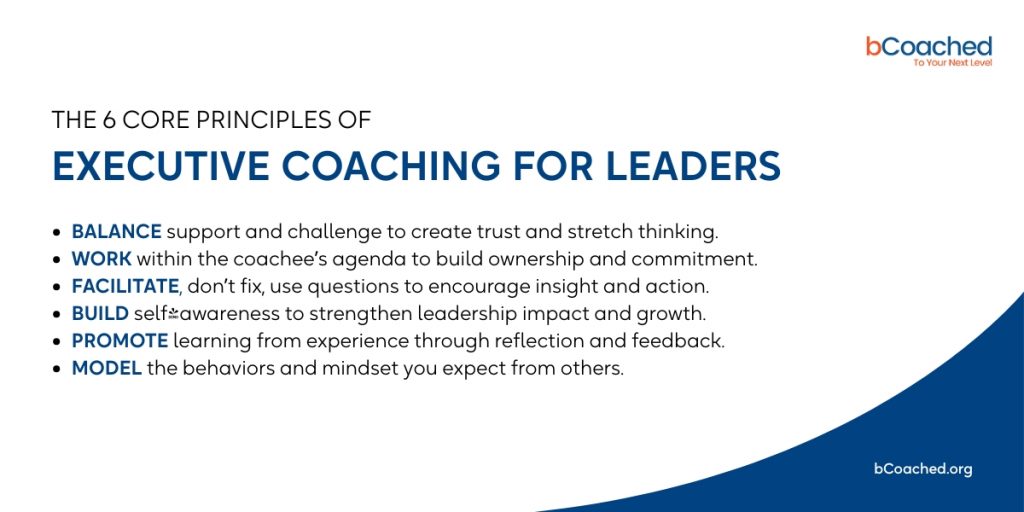
Beyond frameworks, effective Executive Coaching is grounded in a set of essential principles. Whether you’re a leader coaching internally or working with an external coach, these principles remain consistent and practical across contexts.
1. Balance Support and Challenge
High-impact coaching creates a space that feels both psychologically safe and appropriately stretching. Leaders often lean too far in one direction—either being overly supportive to avoid discomfort or overly challenging in ways that erode trust.
Effective executive coaches strike a balance. They acknowledge effort, validate emotions, and show respect, while also asking questions that invite reflection and stretch thinking. When people feel supported and challenged, they’re more willing to take risks, explore new behaviours, and grow.
2. Work Within the Coachee’s Agenda
Executive coaching is most powerful when it honors the coachee’s priorities. Rather than imposing solutions or pushing personal viewpoints, strong coaches allow the coachee to define what success looks like.
This principle preserves trust and ownership. Even when organizational goals are involved, keeping the conversation collaborative ensures the coaching relationship remains intact. Leaders who coach within the coachee’s agenda empower others to take responsibility for their growth rather than comply out of obligation.
3. Facilitate, Don’t Fix
One of the most common pitfalls leaders fall into is solving problems too quickly. While giving advice can feel helpful, it often limits learning and reduces accountability.
Executive coaching shifts the focus from fixing to facilitating. Through active listening and thoughtful questions, leaders help others uncover their own insights. When people arrive at their own conclusions, they’re more committed to action and more capable of applying learning in future situations.
4. Build Self-Awareness
Self-awareness is the foundation of effective leadership—and a central outcome of executive coaching. Leaders who understand their strengths, blind spots, values, and impact on others are better equipped to adapt and lead intentionally.
Coaching conversations encourage reflection, feedback, and honest assessment. Equally important, coaches must model self-awareness themselves. Leaders who acknowledge their own learning edges create a culture where growth feels normal and safe.
5. Promote Learning From Experience
Lasting development doesn’t come from theory alone—it comes from experience and reflection. Executive coaching helps leaders extract meaning from real situations, successes, and setbacks.
By revisiting experiences and exploring what worked, what didn’t, and why, coaching turns everyday challenges into learning opportunities. This principle ensures growth continues long after a single coaching conversation ends.
6. Model the Behavior You Coach
Perhaps the most challenging principle is also the most powerful: be the leader you’re encouraging others to become.
Leaders who demonstrate curiosity, accountability, openness to feedback, and a commitment to learning reinforce coaching messages through action. Modeling desired behaviors builds credibility and trust, making coaching more authentic and impactful.
When leaders live the principles they coach, development becomes embedded in the culture—not just the conversation.
Executive Coaching in Dubai: A Strategic Advantage
Organizations increasingly seek executive coaching in Dubai to support leaders navigating growth, transition, and complexity. Many leaders also complement executive coaching with services such as:
Leadership Coaching for long-term capability building
Career & Role Transition Coaching during professional change
Team Coaching to strengthen collaboration and performance
Explore our related services:
Professionals searching for a career coach in Dubai or leadership development support benefit most when coaching is grounded in evidence-based frameworks and real workplace application.
Leadership Development Beyond Training
Unlike traditional leadership training in Dubai, executive coaching is personalized, reflective, and deeply practical. It meets leaders where they are—and helps them grow through real challenges, not simulations.
The result? Leaders who communicate better, think more strategically, and coach others with confidence.
Frequently Asked Questions
What are the benefits of an executive coaching program?
Executive coaching improves leadership effectiveness, self-awareness, decision-making, communication, and overall performance.
Why should an organization invest in executive coaching?
Organizations benefit from stronger leaders, higher engagement, improved retention, and better alignment with strategic goals.
What do participants gain from executive coaching programs?
Participants gain clarity, confidence, practical tools, and the ability to navigate complex leadership situations effectively.
How do I choose the right executive coach in Dubai?
Look for a coach with proven frameworks, relevant experience, strong credentials, and an approach aligned with your goals and values.
Is executive coaching suitable for senior leaders and high potentials?
Yes. Executive coaching supports both experienced leaders and emerging talent preparing for larger responsibilities.
Ready to Strengthen Your Leadership Impact?
Executive coaching transforms everyday conversations into opportunities for growth, trust, and performance. At bCoached, we partner with leaders and organizations to build coaching capability that lasts.